Sunday, July 18, 2010

"Should Murali retire now?"

A nephew asked me this question on Facebook. His personal take was that Murali could have continued as he had more to offer.

This is always a difficult question - to 'foretell' what could have been for a top cricketer depending on his advancing age and his diminishing form. We did that once or twice earlier (most notably with Dada in 2005).... we did not spare Sachin in 2006 either...(hard to believe now) - and look what happened.


Nevertheless this was my reply, and it is based mainly on Test matches:
As per my observations for the last 1 year it was time to go for Murali. I checked the stats in cricinfo and they supported me: From 1st Jan 2009 till date (18th July 2010), Murali has taken only 23 wickets in 8 tests against opposition (excluding Ban or Zim). His average in these tests is 47+ (almost double his career avg) and his strike rate was 89 (much increased from the customary 50's). He was too great a bowler to be bowling to ignore that year-and-a-half long signal - getting to milestones matters less than being of value to the team. In this case, probably he is only just holding his place in the team (but still not a burden) - and a great cricketer needs to step back when it comes to that stage.

As usual I backed myself up with stats there. But I confess that I would not have been able to state the above with any conviction had Murali himself not called it a day.
 
And what about limitd overs cricket? Well I believe he may just have a role to play in the 2011 50 overs WC. but T20 is also going beyond him...at least that was my first thought while watching Murali a few times in Chennai Super Kings matches of IPL-3. He was not quite the Murali we saw in the first edition of IPL.

Thursday, July 15, 2010

Sachin: Then, now and forever

This video shows how a sixteen year old Sachin spoke in front of TV in 1989, just before international cricket happened to him.

And this one shows how he spoke at age 36 in an interview with Boria Mazumdar in 2009, celebrating completion of Sachin's 20 years in international cricket.

180204 AD:
Manidus (descendent of humans, but more advanced) have found a 21st century relic. After research work they find it is related to the greatest sportsperson of the most populous country of that time, India. The man had lived till the exact age of 100. As a special honour to the man, 21st century society had stored Sachin's face and his smile for posterity using a technique similar to the one used to save mummies in ancient Egypt.

The Manidus people had also restored and watched video records of some on field performances as well as off-field interviews of this man. All agreed on one point: it was amazing that the man's smile remained the same at age 100 (as seen in the relic) as it used to be at age 16. Textbooks of the time confirm that the Sachin the person indeed remained remarkably unaffected by all external factors, including the numerous major developments he saw in his personal life as well as in the world he lived in. The people find it amazing that the story in the textbook can be so readily understood by one look at the expression on his face.

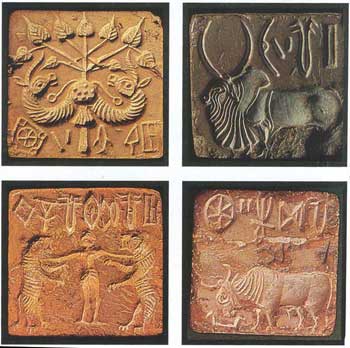
Within months of its discovery "Sachin's smile" becomes greatly popular as an old world relic in the Manidus world, surpassing the fame of Indus Valley civilisation relics - like the bust sculpture of Mohenjodaro priest, the bronze dancing girl from Mohenjodaro and bull engraved Harappan seals - amongst the earlier humans.

Some interesting quotes came through in that 1989 interview, by the way. He liked fast bowling (even the 80's West Indies variety) as 'the ball comes straight on to the bat'.
-------------


On an unrelated point, I watched this 'rare' video on recordings of Don Bradman's strokeplay. Some of the comments referred back to the suggested similarity of Don's game to Sachin's before degenerating into a pointless debate - and I must confess I got drawn into it to leave a comment or two.

Looking at the shots I believe the first one (cover drive, recorded from a match) reminds us most of Sachin. In two other shots - the 2nd one (step out and drive straight down) and 4th one (square on the off) - the initial movements of Don remind us of Sach but then the Australian ends the shots very differently. Our seasoned eyes just cannot imagine Sachin stepping out to drive the ball down the ground and yet NOT play a lofted drive.

UPDATE: Just found a better video of those 4 recorded Bradman shots. Also no ugly debate going on in the comments there (not when I read it), hence left no comments...

Tuesday, April 27, 2010

The Foliage

Some weeks back I clicked this picture with a cellcam while waiting at my daughter's skating classes. This plant had an interesting arrangement of foliage. Younger leaves were coming into their own from below the dark shaded older ones at the top even as the youngest lot could be seen emerging further down. 

An analogy had struck me as soon as I saw the pattern in those leaves. I am trying to put that vision pictorially here.

Friday, December 18, 2009

Jayasuriya

Peter Roebuck writes a piece on Jayasuriya who rose above himself as a batsman but never added the negatives that people often inbibe in their nature on that treacherous journey.

Who else can fill your mind if you try to think of a Viv Richards who is not throwing attitude, a Sehwag who is even less complicated than Sehwag on seeing bad balls and knowing what to do with them, a great player who always carried out the orders of his various skippers like an excited schoolboy right through his journey from twenty to forty in international cricket?

We see him so less these days... and I thank Peter for reminding us that another great career is coming to a close andwe should be ready to stand up and cheer with gratitude for what he did to the game.

Here is another old post of mine on Jayasuriya from his amazing days.

Tuesday, November 17, 2009

Greatest cricketing moment of this decade

2009 is coming to a close. Rahul Dravid chose to play an uncharacteristically racy knock against Sri Lanka in the first Test started today. Certainly a memorable knock.

Or is there another cricket-memory that you recall far more vividly than Rahul's 27th Test ton, something that effertlessly defines the decade of 2000's for you?

I fancy some of you writing back on the comments section of this post on the event or moment that you consider as the greatest cricketing event or moment of this decade.

You can give us a line on either "The cricketing event / moment of the decade" or "The Indian cricketing event / moment of the decade". As you wish..
But please put just one entry per person - the most favourite entry for you.

I guess my "Cricketing event of the decade" was the masterful match-saving 150+ by Ricky Ponting in the 3rd Ashes Test of 2005. It was scored on the 5th day in daunting conditions. A critical series was at stake, and he needed to keep out the best fast bowling attack that Australians faced over a whole Test series in the current decade.

My Indian Cricketing moment of the decade? Laxman-Dravid returning unseparated after a complete day's play at the Eden Gardens in 2001....

Monday, November 16, 2009

Cric photo blog on cricinfo

Cricinfo has started this new and absolutely lovely blog on some memorable snaps of live cricket. Those are from the collection of photogrpaher Hamish Blair of Getty Images. As fascinating as the pics are the technical and situational descriptions that go with it. C'mon Hamish, we are waiting for more, lots more.

Saturday, November 14, 2009

Se7en

You are sitting on a couch with your 7th bowl of masala popcorns. It is the final ball of the final session of the final Test match of an unusual series of close matches yielding no results due to various cricketing and atmospheric reasons. This last match was a close affair till the end, which is why you have taken a day off and latching on to the television. Your team is bowling the last ball of the day.

The opponents came close enough to winning it but a flurry of wickets claimed by your quickies in this final session had them gasping for survival. They are 6 runs behind your team's score. The best they can do is tie the match - which does not change the match or series situation in any way.

Your skip ambles to the bowler and customarily asks him to avoid delivering no-ball or wide. He then yells at the fielders to back up and ensure no overthrows. Skippy winks at the 'keeper - no words needed for that man. Bowler runs in to close out the series.

And then this happens..

[Statutory Warning: The setting is imaginary; the result of the series on this video was 5-0 against the bowling team. It is the possibility, my dears..]

Friday, November 13, 2009

20 yrs of passing Tests, and 22 yrs of keeping his head

As the comments under this 21 year old Harsha Bhogle article on Sachin explain, the republication of this old post has taken back many readers to their younger (or youngest) days.

It takes me back too, but not that far. A not so memorable afternoon from 2002 for Sachin the batsman which happened to coincide with one of the greatest moments of this decade for Indian cricket. The Natwest final, where India successfully chased 326 on the shoulders of 2 young men called Yuvraj Singh & Mohammad Kaif even as the top order stars had all departed with more than half to get. One of the stars was our little big man. Sachin was dismissed at 14 playing an awful shot that put an end to a scratchy innings in front of a summer crowd at Lord's.


He hung his head on his way back. To his horror (or so we thought) some atrocious
'lily livered landlubber' ran into the field and kept speaking to the dejected man all the way to the boundary rope till the security folk found the action close enough to rise from their seats and act. We waited for something to snap in the greatest batsman in the world (unarguably, at that point of time anyway). But Sachin did not respond to the guy even once. He did not even betray any sign of being aware of the existence of this 'sea-gherkin' hovering and blabbering around him. It stayed that way till the end. No complaining to the security, no gestures. Sachin went straight into the dressing room as if it never happened.

I was in no mood to stand up and clap as India were in dire straits in another final due to a silly innings from Sachin. I wish I had applauded. Applause means the most when accorded at the right time. I still keep making up for that non-appreciation somewhere deep within whenever I recall the restraint that Sachin displayed that 2002 evening. It came to him as effortlessly as the straight sixes during his unforgettable "turning back the clock"
175 against Australia on 5th Nov 2009.


Ramakant Achrekar, being a concerned guardian to the 15 year old genius under his tutelege, had expressed his fears in that old article:
" This (publicity) is ridiculous. These things are bound to go to his head. He will start thinking he has achieved everything. I hope all this stops he can concentrate and work hard."
The publicity and distractions never stopped. They only went from one plane to another. And he (Sachin) never stopped concentrating and working hard. And it never went to his head. It is quite possible that he read this 'Sportsworld' article and remembered his 'guru's words as clearly as he remembered the sledging from Aussie bowlers during his 1992 tour Down Under.

I doubt if we will see the likes of him again. The batsman, maybe...the complete man, I have my doubts. I wish I could be what he is even without his 12000 & 42, his 17000 & 45, his numerous other records. At least I would be nice to the people around me, good and not so good. And I would be at peace with myself. That's worth envying in these times, isn't it?

Achrekar sir can rightfully ask his share of our gratitude in making Sachin the man he is. Certainly as much as Merv Hughes can claim the gratitude of the world for making Sachin an eternal Aussie baiter.

And how could I miss this....I wrote
a post in 2005. It was on a sporting champion I dreamt of, an ideal sportsman. I did not have any real sportsperson in mind when I wrote the post. Sachin mark-2005 had his little quota of blemishes. His refusal to come out to field after skipper Rahul declaring the Indian innings ar Multan '04 with Sachin on 194* was then a recent affair. He would still be slowing down a little after passing 80 to pick up his next ODI hundred....

But then they disappeared; not my memories of his ever-so-slight indiscretions but the indiscretions themselves. He never did anything unbecoming of his stature after that Multan affair. He came back to the slip cordon to help India win more matches. He stopped loitering around to pick up another ODI ton. So what if he lost form? So what if he was struggling and looking over the hill? So what if his flowing runs of 1990's were distant cousins to his workmanlike tons of the 2000's? So what his erstwhile art work was looking like an artisan's work? With more failure as a cricketer than ever before, he strangely kept emerging as the champion I envisaged in
that post.
That he has turned a corner in the last 2 years and inexplicably recaptured so much of his past glory after passing his 18th year at the top is but a footnote to this tale.

On the occasion of his completing 20 years in international cricket, I dedicate the post
"To our Champion" to the man who, on this day, is every bit of the champion I described in that post. It was surely written for you, Sachin Tendulkar. Please take my bow.
[cross posted on Amber Kaleidoscope]

Update: This thought provoking article was written by Anand Vasu of cricinfo way back in 2000. It appears on Sachin Tendulkar's player page on cricinfo (as on today). In this article Anand too is wondering what can possibly go on in the mind of a champion while going out to perform under an immense burden of expectations.
"He is no statesman, no politician, no religious leader. And yet he holds sway with as much power of as any one of the above. Whether he faces it or not, he is one of the few Indians who binds the whole of this country. Probably, no other person in the country is as uniformly admired as him. He is in a position of immense power. Did he choose to get to this position and work towards it? One reckons not. The price he has had to pay as an individual is incomparable to the rewards."

Saturday, October 24, 2009

Still the team to beat

For the last few years we are speculating on the decline of Oz from their lofty standards. Much of it is true.

"Australian cricket team is on a downward spiral" - I bet you heard that before. They lost major players in a succession. The other teams were catching up. Their two major contenders for the top position, India and South Africa, were taking turns at putting the once invincible Kangaroos on a frying pan. 2008 was a particularly bad year for them.

This is October 2009. They have beaten South Africa in their own backyard earlier this year. The away Ashes was once again a poor campaign for the 'declining team'. They did excellently in the ODI series against the old foes though. The mid-year struggle returned to haunt them at the T20 World Cup. They fared poorly.

But then they came back and grabbed the ICC Champions' Trophy while the other two major contenders struggled. The just concluded Champions' League T20 Cup at India also had a similar story to unveil. Home teams (Indians) struggled and petered out before semis. South African Cobras were upstaged by dark horses Trinidad & Tobago - oh-so-familar. New South Wales, from Down Under, stole the thunder and ended up at the finishing line.

Australia's Test supremacy is no more a given. There was not an iota of that awe-inspiring dominance of recent past in their Oneday or T20 wins of 2009. Their form has been on a swing ever since the Glenn-Shane combo walked away into their glorious sunset.

Yet they still are the team to beat. Dhoni and his men would have done a world of good to their abysmal limited overs performances of past 3 months if they manage to put up a good show against this team. And he will do well for himself if he can take a few tips on his opposite number Ricky Ponting on how to 'turn tides'. Ricky hasn't quite done it as grandly as that term suggests, but he has done enough to keep the hope afloat for his team and have his mates believing that they are still at the top. That is what you need for your next moment of glory.

Wednesday, October 07, 2009

Spirited cricket

NDTV were interviewing Lalit Modi and Ravi Shastri on the exciting prospects of Champions' League T20. Rahul Dravid joined in the interview. Though ke kept looking like a fish out of water in the interview aimed at exhorting the newest thing in cricket's entertainment avatar, Rahul came up with the two best quotes of the session.

Rahul reflected back on the way his T2o team Bangalore Royal Challengers (BRC) had come back from being down and out at half way stage to reaching the IPL2 finals. Lalit Modi took this opportunity to pay compliments to Rahul's cricketing abilities in his self-styled vocabulary, mentioning that Bangalore Royal Challengers were such a bad shape at half way stage only because Rahul was away at the time 'having a baby'.

Rahul is good at hiding his spontaneous expressions. We know that from his countless post-defeat press conferences as Indian captain. We could not trace if he pulled back a chuckle at Modi's words but he certainly returned a good line of his own: "Some things are more important than cricket."

A while later, the interviewer asked Rahul about his team owner, liquor baron Dr. Vijay Mallya. There is a background to that question. Ugly incidents followed the bad show of BRC in the inaugural IPL, eventually leading to sacking of Rahul as skipper in IPL2. Rahul again managed to hold back and yet not sound boring. He said a few words which went like: "He wants us to play in the right spirit. Spirit is the key word here."

One of these days, Royal Challengers may just happen to collect the maximum points for gentlemanly conduct on the field in some T20 tourney. That won't be surprising at all with Anil Kumble as the team skipper. As a result we may actually find Dr. Mallya accepting the spirit of cricket award at an ICC awards function.

Far from the dais and away from his candle-lit table at the awards nite, the first BRC skipper would be guffawing away uninhibitedly in front of a wash room mirror even if he might have won nothing.

Monday, September 28, 2009

Spin it to win it

They used to say that South Africa was the deathland for spinners. There were as many good spinners in the SA team of the 90's as there were fish in the Dead Sea. It slowly started changing since the middle part of the current decade. The pitches in SA did not change much. However the spinners around the world have gradually started realising what Shane Warne always demostrated when he used to bowl in Australia and South Africa - that bounce could be as much an ally of spinners as turn.

The modern spinners have since worked with an objective to use the South African bounce. The bigger grounds in South Africa (certainly bigger when compared to the average sub-continent ground) compliment the spinners in taking help of the extra bounce. The great return of spinners in the 2nd edition of IPL showed that a new world awaited quality spinners in Springbok Land.

The available results and team performances in the current ICC Champions' trophy, in particular the India Pakistan match, spell out in no uncertain terms that the show from a team's leading spinners is going to decide the team's progress in the qualifying stages of the trophy. And with pitches likely to get more ragged durin that phase, the better spinners are likely play even more important roles in their teams' progress as the tourney nears its business end.

There is also a possibility of the script unfolding in a different fashion. The bounce is likely to go out of the pitches in latter stages. It will take some adjustment for the spinners to adopt more of a sub-continent approach (more turn, less bounce) to avoid being found out by batsmen.

Eleven XI's

I found some thoroughly enjoyable selections in the eleven greatest XI's in ODI's.

Some of the nippy comments made to support the various selections:

Brian Lara (in All time World XI): "Not many can guide a waist-high Waqar delivery outside off-stump over fine leg for six. Fewer can make a massacre look beautiful."

Glenn McGrath (in All time World XI): "No bowler makes batsmen more doubtful of their judgement. He wrecks confidence in inches. He knows that two inches are all you really need."

Azharuddin (in The most elegant XI): "The Nizam batted like one. We must display his wrists in the Salarjung Museum (after he departs, of course)."

Bishen Bedi (in The most elegant XI): "Sent the ball on a beautiful loop, which, long after the batsman had departed, left a rainbow on the pitch."

David Gower (in The most elegant XI): "(C) If Michelangelo were alive, he would have sculpted this David, in cover drive position."

Glenn McGrath (in the most boring XI): "What a great bowler! And with just that one delivery: the ball swinging away a wee bit from the off-stump."

Ravi Shastri (12th man in the most boring XI): "That this man once hit six sixes in an over in a Ranji match makes us believe in miracles."

Jonty Rhodes (in the fielders' XI): "Do we need to explain? Was the first superstar of fielding. He redefined the art. He did to fielding what the Wright brothers did to transport."

Shane Warne (in the Fielders' XI): "Despite the fervent text messaging, his fingers were always up to the responsibilities of fielding."

Wasim Akram (in the Left handers' XI): "Because we swear we saw him bowl an inswinging outswinger. And because he planned—and succeeded at—a dismissal involving a set batsman and a full-toss."


Saturday, September 26, 2009

National Anthem by South African Singer

I thought this was a rather sweet rendition of the Indian National Anthem by a South African singer. This guy did another good job some time earlier with the Pakistani national anthem as well. That is when I decided to record the Indian anthem from the telly with my camcorder. I liked it enough to upload it on youtube.

FUN FACT: Notice how Ashish (Nehra) and (Rahul) Dravid appear both in the words of the anthem as well as in the video, but in converse association! Ashish Nehra appears on screen as the anthem goes "...Maratha DRAVID Utkal Banga", while Dravid appears on screen soon after the anthem goes "taba shubha ASHISH maange".........

The two ODI comeback men probably needed to swap their positions on the queue to make more appropriate tele-appearances in tandem with their names getting sung as part of the national anthem. After all, not everyone is fortunate enough to have their names in the national anthem - ask others in the Indian cricket team.

Holding the hands of greats

A little over 20 years back, I was dreaming of becoming a national level cricketer some day who could play 70 odd Tests and finish with 300 wickets and 3000 runs in Tests. That dream disappeared pretty soon afterwards.

Before start of the 2009 ICC trophy India-Pakistan league match today, the players of both teams were escorted out by young boys and girls. Some of them, including Sachin, were actively chatting with the kids who were holding their hands as the cricketers walked out into the ground. These kids were much the same age as I was when I used to harbour those Test cricketing dreams. Actually even Sachin & Dravid too would have been of similar age in those days. They are a little more than a year older than me.

They - Dravid, Sachin and other great cricketers like them who are close to my age - too must have had those dreams, and they have since done enough to go ahead and live their dreams. In fact, some of them have done so much that it is a dream for kids of same age of present times to be walking hand-in-hand with a Sachin or a Dravid and find him not only smiling but also showing a keen interest to chat with them.

And why just kids? The old fella in me turned back the clock at that sight and became the cricket enthusiast of yore for a fleeting moment. I felt goosebumps at seeing kids getting a chance to hold the hands of some of the greatest cricketers today. I envied some of those kids when I found them being indulged by cricketers of the stature of Sachin. Even at this stage of my life I could have done with such an unforgettable minute or two of indulgence!

Saturday, June 27, 2009

And Afridi now....

Do Michael Jeh and me have a common hub to our "cricket thought processes" somewhere? The next post after Dhoni that I was (not surprisingly) unable to put up on Pavilion View after Pakistan's T20 triumph last week was (not surprisingly again) on Afridi.

But here is Mr Jeh, blogging on Afridi on Different Strokes and urging the maverick Pak all-rounder to utilise the rest of his cricketing days better. Much like I urged Shoaib to use his post-30 cricket career wisely 3½ years back [on an earlier incarnation of the same forum that Michael now blogs in]. I sincerely hope that Michael's hopes don't get dashed.

My thoughts on Afridi are a little different from Michael's though. When I remember and try to list out cricketers who were born for T20, Shahid is one of 4 people that invariably come to mind. If there are Gods of T20 up there, I believe they would not like Afridi to retire before making a mark on their game. As soon as Afridi held up his bat in victory after the winning shot was made in the 2009 T20 final, I remembered another man who came back many years after writing himself off everyone's minds to win the trophy that destiny surely wanted to be his. It was in another sport.

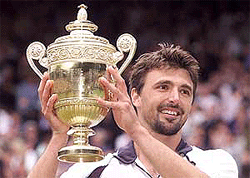
Goran Ivanevic lost 3 Wimbledon finals in his 20's. Out of sight, out of mind and playing on a wild card, he fought dipping game and advancing age more than his opponents over a fortnight on London grass a few years later and roared into the finals of Wimbledon. That evening he held the emotions of a whole generation of tennis lovers across the world under siege for a few unforgettable hours. He won - and we know he was not the only one in the world who cried at that moment. Empathy and love. That's what you earn when you play your game from your heart and more than make up for the tantrums you throw by overruling umpires at times to rule line calls against yourself.

Great memories are often accompanied by better memories. Goran had an opponent who displayed the essence of sport by throwing in everything he had during the game to try and beat the Child of Destiny, yet showed genuine appreciation of Goran's emotions in his own defeat that meant he would never hold the Wimbledon crown aloft like Goran.

Patrick Rafter, I am your fan forever.

PS: I forgot to name the other 3 guys that were surely born for Twenty20. Shoaib Akhtar, Billy Bowden and Romesh Kaluwitharana. I must have blogged on them sometime, somewhere.

Update: Yes I did. On this very blog. Am I losing memory quicker than Sanjay Singhania? Damn.

Update 2: The other thought I had - this one similar to Michael - as Afridi played his innings in the T20 World Cup final was: This man repeatedly and unrepentently bats in full length international cricket matches as others would in the last over of a 5-over friendly. He does that in Tests and in 50-over games alike. But here he was 'anchoring a chase' in a Twenty20 by remaining unbeaten till the end! Someone brought the horse to the water 13 years ago - and NOW it is finally drinking!

'Make-shift' post on Dhoni

Since India's ouster from T20 World Cup I was planning to put up a post on Dhoni. It never materialised.
I thank Michael Jeh (Different Strokes, cricinfo) for allowing me to make up somewhat for that non-post. He has written a fine post on Dhoni at 'Different Strokes' where he discusses much the same issues I had in mind.

I am referring you to that post, on the rather flimsy ground that I made a comment on it.
Sorry for that, folks. I truly am off blogging these days. Worse, I cannot even put a date on when (or if) I will be back to full-time blogging.

Sunday, May 24, 2009

"Paara" cricket in Bengal

[Note: I made this post nearly 2 years back in another blog. The site has since been revamped and the post is nowhere to be seen. I have a soft corner for that post as it brings me back to my past and makes me say Hi to it whenever I go through that post. I am reproducing that Sep'2007 post here in Pavilion View.]

Sep 28, 2007

“Paara” cricket in Bengal’s suburbs

Bengal has been game for cricket for over two centuries. The first ever cricket match in Bengal apparently took place as early as 1792. Interestingly that match was played between Calcutta Cricket Club and a combined team from Dumdum and Barrackpur, two suburban cantonment towns near Kolkata.

As Ramachandra Guha observes in the opening chapter of his excellent book “A Corner of a Foreign Field”, cricket was the topmost game in Britain in those days. The British armymen posted in Indian cities and suburbs brought the game to India. While cricket in Kolkata was played mainly in inter-club format. The numerous small setups of British officers in the interiors of Bengal did not enjoy the luxurious infrastructure of clubs though. Nevertheless they found avenues of recreating home in a foreign land. Their habit of playing cricket in winter afternoons was as much an effort at competitive sport as an event of social gathering and entertainment. Often matches were arranged with nearby establishments and it was no different with suburban cantonments in and around Kolkata. In the process the British armymen had a big hand in popularising cricket in suburban West Bengal.

I grew up at Ichapur, a small town in North 24 parganas district and 6 kilometres from the above mentioned Barrackpur. As depicted in the 2001 cricket classic ‘Lagaan’, I can easily imagine forefathers of my friends in Ichapur / Barrackpur picking up this strange game from vantage points outside the parade grounds. [Why were my ancestors not watching? Because they hailed from Midnapur, where cricket must have reached much later.] Guha refers to army officer A G Bagot’s observation about the early aversion of Indians to the nuances of cricket in his account “Sport and Travel in India and Central America”. I too am inclined to believe that this multi-generation love affair with a foreign maid named Miss Cricket must have started off with our great great great granddads assuming the Britishers to be odd people capable of finding joy in “running about in the sun all day after a leather ball”.

Two hundred years have passed since. Barring the odd cricket coaching centre, the game still awaits infrastructure, development and organisation in the suburbs. Yet cricket is a widely played game in West Bengal. “Paara” cricket (‘paara’ means neighbourhood in Bangla), the breeding ground of suburban cricketers, comes in all sorts of customised avatars though.

The neighbourhood sporting club

The grassroot unit of competitive sport is the neighbourhood club. Typically it will be a one or two room infrastructure in the locality where young bachelors will assemble in the evenings to play a few games of carrom or cards. The club is often an spontaneous assembly of adolescents and grown ups rather than an officially registered body. The clubs generally seek to garner social prestige mainly through organising some or all of the many Pujas of Bengal.

The club folk generally play their sport in the patch of vacant land nearest to the club room. Soon it becomes their home ground.

Learning the sport

The suburban cricketers often take their first lessons of cricket from appreciative seniors in the neighbourhood club, who in turn were taught similarly. Often their bowling and batting techniques remain largely the same as their first attempt at delivering a ball or playing a shot. Seldom are any corrections or improvements brought about in a learner’s game unless it is drastically problematic or the player himself insists on it. Only a handful of youngsters are lucky enough to be exposed to ‘coaching’.

The concept of learning cricket is gradually changing because a significantly higher percentage of today’s parents are cricket-educated and attach more importance of proper learning of the game by their wards. Hence the clubs these days are more inclined to appoint sports coaches.

Competitive cricket

Competitive cricket starts when a kid becomes good enough to represent his club when they play a neighbourhood club. This match may be played either in the home ground or away. In addition to the bilateral matches, there are the tournaments that give away coveted trophies, ones that serve to adorn the trophy cases of the clubs and allow the club members to swell with genuine pride.


Tournaments and their rules

Entry into professional life has made me a little detached from those areas over the last decade, but till the late nineties there used to be no authority beyond the neighbourhood club hosting a tournament that had a say on playing conditions and rules for the tourney. The hosts’ ruling was final. That does not necessarily mean they twisted the rules beyond recognition. The post 80’s exposure to televised cricket ensured that most players and organisers had a sound knowledge of the game’s basic laws. I am sure things are even better now.

However all such tournaments are generally played on the home grounds of the hosting club(s) and the widely varying shapes, landscapes and boundary conditions of these grounds ensure invention of rules that best ensure a good game of cricket. e.g. Presence of a very short boundary on any side of the wicket will often encourage a ‘boundary two’ for all ground shot boundaries and a ‘four’ for over-boundaries to that side. No sixes, that is. The boundary scores may be further reduced to deter batsmen from hitting shots there in case a pond exists on that side! Also, matches played in small grounds would often be ‘9-a-side’ games.

Canvas and leather

Most games in such tournaments are played with ‘cambis’ balls over a 16 (or 20) overs a side format. ‘Cambis’ ball is really the canvas ball or tennis ball. [For other such ‘paara’ cricket terminology have a look at
Abhijit Gupta’s Paara Cricket Glossary] People coming out of suburbs often do not get a chance to play with leather balls till they reach college. That can make the purists cringe but I am afraid not much can be helped there.

The concept of a groundsman is unheard of in suburban clubs and playing with leather ball on such grounds is a heavy physical risk for both the batsmen and fielders. Moreover, grounds are shrinking in sizes and numbers every year and residents of buildings serving as boundaries of these cramped playing spaces are hardly willing to patronise three broken windows and one injured toddler every month.

Not just the ball but the duration of these games may well raise eyebrows of those not having the inclination to acknowledge cricket beyond the ‘real’ variety. Players – the ones in suburbs, that is - only have two hours to play. The duration, hence, are always in line with the latest cricketing invention, Twenty20. Barring the absence of ‘cambis’ ball and presence of international cricketer’s gear, Twenty20 is the closest thing to ‘paara’ cricket I have ever seen. As Ajay Jadeja said the other day, “the first time I played a 5 day game was my first Test match”. And Ajay is a city-bred player from a traditional cricketing family.

Perhaps tennis ball cricket needs to be appreciated better; after all, it has produced a leading batsman-keeper at the topmost level who is also proving to be a capable national team captain on his very first assignment as a leader. Mahendra Singh Dhoni is as much a product of suburban cricket as are his main pace weapons RP Singh and S Sreesanth.

Of course the odd leather ball tournament will also happen in the area, but those would generally be in industrial meets typically organised by a manufacturing unit in the district. The host unit will send invitations to clubs to participate in the meet’s “one-day cricket tournament”. [Here, “one day” signifies wrapping up the tournament in a day.] Back behind the closed doors of an invited club the bunch of tennis ball talents in the club will get divided into two groups over a meeting: the ones that are not fazed by the risk of injury posed by hard red ball, and the ones that will start making excuses and opt out of the tourney. The former lot will then effortlessly morph into masters of the ‘deuce’ ball [ref: that
Abijit Gupta piece, once again] and go ahead to get a taste of armoured cricket.

Women’s cricket

Oh yes, women’s cricket was non-existent in the districts even as late as the 1990’s. Jhulan Goswami, the fastest woman bowler in the world and ICC cricket of the year 2007, learnt her cricket and acquired pace in her bowling through playing with boys. As much as revealing her spirit and tenacity, it also says that players like her will emerge rarely unless there is an infrastructure in place. Hopefully this part will change too. Jhulan herself may have a big role to play in it.

Love of cricket

Suburban tournaments are mostly organised by local sporting clubs. Some of the bigger tournaments are hosted by a group of clubs and even manage some sponsorship. Sponsorship is relatively easier to find for tournaments in Kolkata (Bagpiper sponsors a prestigious ‘paara cricket’ championship in Kolkata) but for their suburban brothers financing a tournament can be a painstaking affair. Competing clubs are often charged pocket-pinching entry fees to fund the tournament expenses. Most of these competing clubs are run by youngsters with meagre incomes. Those tournaments will never happen unless so many cricket loving young people are ready to part with big money in form of participation fees.

The better players get a platform to exhibit their skills in such tournaments and often get noticed. Subsequently fame spreads by word of mouth and they get hired by other clubs to play in other tournaments in exchange of a small sum of money. The term for such ‘professional’ cricket is ‘khep khela’. The luckier and more enterprising amongst the good players get to attempt a breakthrough into mainstream cricket by qualifying to play for first or 2nd division leagues on behalf of some Kolkata cricket clubs.

Farewell to cricket

Most of the ‘star’ players though have to soon look for livelihood by the time they end their schooling or graduation and cricket in their lives fades away like a flashback. From live participation in games played on a green field with a bare patch in middle, cricket loses one of the three dimensions to these young men and gets firmly ensconced in the idiot box, to be followed only in the spare time extracted from a hard day’s work and a million other daily duties.

I saw each one of my childhood playmates get detached from cricket that way. One or two amongst them were very good and could have even shone at higher platforms. They were never serious to pursue cricket as a profession though, partly because we grew up in a society that never suggested such ‘self destruction’ to its kids and partly because a typical Indian youngter is not likely to be taught to back himself by anyone other than his own inner voice.

A memorable match

Jhulan Goswami’s native place Chakdaha in Nadia district is about 50 kilometres of railway journey from my place Ichapur in the opposite direction of Kolkata . Chakdaha first caught the regional headlines for producing a remarkable student that topped both the secondary and higher secondary board exams. In those days A prestigious tennis ball knock-out tournament used to be hosted every winter in Chakdaha (I do not know if the tradition of the winter tourenament still continues). We had participated in it once in the late 90’s.

The ground was a real small one; a 40 yard boundary on the off-side and barely 25 yards on the on-side. The number of spectators assembling to watch the match surprised us. (Obviously they had to stand on the lanes, as the ground could not be curtailed any further). Apparently the tournament already had a bit of history. A spectator spotted some familiarity in the face of one of our players and asked the name of his father. Upon learning the father’s identity he was elated. “So he is the son of Chanchal! We still remember how well he played that year here at this ground”.

It was a 16-overs-9-players-a-side match, with all other rules of normal cricket. We scored only 84 in a 130-par-score arena and duely lost the match. But more than anything else I have ever read about or seen in cricket that one match demonstrated to me the value of taking every chance in the field. As soon as the 2nd innings started one of our bowlers conceded a 24-run over. And yet it turned out to be the most thrilling match I have played till date as our team, catching everything and goofing up just one half-chance of a run-out, lost by a nail-biting solitary wicket mainly through the solo shepherding act of a late middle order batsman.

Not quite a ‘Lagaan’ ending for us there - even after generations of picking up the bat-ball game from the East India Companywallahs in and around Barrackpore. And to think Lagaan’s Bhuvan and his team learnt not just playing the game but also the art of finishing a cricket match inside of a month!! Is that why Gujarat produces more Test cricketers than Bengal?

Ground realities

I will have to end this piece on a sad and alarming note. The next generation kids of my old Ichapur ‘paara’ have no home ground to play. The defence colony ground we played in has been put out of bounds of the general public due to growing security concerns, and most of the other nearby grounds have long yielded to increasing demand for dwellings. I am sure this has happened to many other Ichapurs in India.

The basic / minimum requirement for development of any sport is the existence of open playgrounds in enough numbers. Playgrounds not just need to be protected from the infrastructure boom but also increased in numbers to the extent possible. And such drastic steps need to be taken without delay, else even the few remaining spaces will be gone. Leave alone producing cricketers to win world cups, this country may not even have enough people like me to write or reminisce about the game.

Instead of passing thoughtless remarks on the Indian inability to produce a ICC-event-winning side in two decades, Mr. Malcolm Speed will do well to take a reality check on such aspects and instruct BCCI, the ICC’s self-appointed money-spinning wing that needs instructions to carry out its other greater duties, to join hands with other outdoor sports bodies in India and ensure protection of playgrounds. This is going to be a long drawn task involving implementation of a few government ordinances, and hence needs to be initiated right now. Identification of vacant areas in various districts, acquiring them and converting them into ‘sports sanctuaries’ seems to be our last chance to ensure that enough numbers of young men and women in this country keep playing and appreciating outdoor sports half a century hence.

Spinners were more successful in SA's IPL-2009 than the Indian IPL of 2008

What was it that allowed that to happen?

Was it the extra bounce? Perhaps it was. The extra rise was clearly worked to the advantage by all the top spinners including Kumble, Ojha, Warne, Vettori, Harbhajan and Muralitharan.

Also, was it the extra 10 or so yards from the batting crease to the boundary ropes? I remember Ian Chappell expressing frustration last year at the bats getting better and the fields getting shorter at the same time. His argument was that by allowing this to happen the cricket administrators were looking for short sighted satiation of the spectators for more sixes (for that is what the administrators can think of as the only love of us one-dmensional cricket fans). The short boundaries were making the spinners lose the inclination to flight deliveries as even the mishits created by good bowling from spinners to top batsmen would regularly go over the fence instead of becoming a catch in the deep. At least the 75-80 yard boundaries in South Africa give tweakers some extra 'ground'.

But someone will need to explain to me where the turn came from. Since their return from exile in the 90's, the SA cricket team were as notorious for their lack of spinners as the pitches in their country were renowned for not supporting them. However spectators got to see some sharp turn in some matches with 6-7 over old balls. And they got that not only from the best spin doctors but also from some of the lesser known (but adequately effective) practitioners of spin bowling.

Did the IPL supremo Lalit Modi manage the impossible of not only taking the tournament from Asia to Africa but also some of the original Indian 'pitch' and tenor within a one month timeframe?

Can't rule that one out, going by the way Modi is beginning to rate himself as a 1st class miracle worker and trying to conjure up bigger challenges for himself.


Arranging 2 IPL's a year, for example!!

Asking rates above 10 for more than 5 overs are difficult to get even in T20....

....no matter who you have at the crease during those overs with whatever number of wickets in hand.

Need proof?

Have a look at this chart for the IPL season 2 stats showcasing best strike rates amongst batsmen.

The list may well get new additions after the 2nd semi final and the final, but as on 23rd May morning there are only a handful of people who could twice achieve a strike rate of 200 or more (i.e. 2 runs a ball, or 12 runs per 6 balls) in the completed innings they played over 14 or more matches.

They are the usual suspects - Ross Taylor, Adam Gilchrist and Yusuf Pathan. What's more creditable, they have achieved these strike rates when it has mattered most - in the 2nd innings(if I am not mistaken then all of these 6 specials barring one Y Pathan innings were done chasing down a total - or is it 100%?? Hope someone answers that). This shows how good they have been in cracking the opposition team's bowling strategies.

But ultimately this list also shows that even these 3 whirlwinders were THIS good in only a couple of matches in such a long series. And that some other not-too-less special guys like Virender Sehwag, Yuvraj Singh, MSD, Raina, ABdV - for all their fireworks - could either not achieve a completed innings with 200 strike rate or managed to get there just once. In other words, these 2-runs-a-ball-and-more innings were not as common as we may presume they were if these stats were not presented to us.

Say one of these top 3 guys (Pathan / Taylor/ Gilly) were chasing 10 an over and also playing one of these special innings. A simple calculation will show that they would still be required to either take risky singles to hog the strike or need their partners to also score at 7 or 8 to get over the line. In the closing overs it is quite likely that the partner will be a newcomer at the crease. That complicates things further.


And that, eventually, gives us an idea why it can be rather difficult to chase 10 plus in closing overs even with wickets in hand.


Knockouts are the phase where this pressure of asking rate will be felt even more in the 2nd innings. Why 10, anything above 8 can prove to be too much pressure in the final 5 overs of a semi final or the final. Now watch the replay of Gilly's innings yesterday and rate it in perspective. In a semi final clash and chasing a not too modest target, he scored at 3 runs a ball for the first 17 balls and at 2 runs a ball for the next 17 before getting out in the 35th delivery he faced.

How do I rate it? Even leaving alone the premium quality hitting demonstrated by the ageless gladiator from the Aussie Juggernaut of the 2000's, I consider Gilly's 85 yesterday to be the best of all above-50 IPL 2009 innings in terms of significance, and is arguably also the overall best amongst all knocks played in the 2 editions of IPL we have seen so far.

[Closest contestant in overall category: Warnie's cool headed finish in IPL 2008 final. Warnie scored just 9 runs, but then it was special not for the volume but for the sheer weight of the situation he was in].

Saturday, May 23, 2009

"Good captains need to be fiery and pumped up on the field"

Do you believe in that?? Then perhaps you can't even picture the man I will talk about now as a remotely good one.

Look at
this!!

We remember Shaun Pollock the captain as the guy that allowed his team to get knocked out of the 2003 world cup by miscalculating the rain shortened target by 1 run....But he is the 3rd most successful captain after Ponting and Jardine in the history of Test cricket. And that record spans over not 3 or four but 10 series which he captained (unlike most of the other guys in the top 10 list).

I think whoever pushed him out of Test captaincy (or did not think to coerce him to continue in tests after he stepped down after 2003 WC) pushed SA team back by a few years and allowed SA cricket to pay a price costlier than that 1 run.

I still remember the 3 match ODI series in
April-May 2000. Steve's not-almighty-but-already-mighty Aussies landed in SA to play the series that was scheduled about 7 days after what turned out to be Cronje's ouster from cricket.

It was in such a scenario that Shaun Pollock took up the South African captaincy - and SA almost surreally won that series in spite of all that chaos leading up to the series. Fluke? I guess not. Aussies played well and still came out 2nd best. Later in September the same year we saw the Aussies taking SA on in the new 'covered' stadium in another
3 match ‘away’ series. Polly's Springboks lost the first match badly. However they came back and TIED the 2nd one before winning the last one.

He was perhaps the one international captain in the 2000’s who never got his due as a galvaniser of cricketers into a unit stronger than the sum of its parts. [I am not talking about Warnie / Gilly and such like that did not get the opportunity; that will be a whole new discussion and the topic of some future post of mine]. If you look back at the particular phase in last year's IPL when MI started to turn around (only to botch it up in the last 2 matches and miss the semis berth) you will notice that the fightback happened just as Polly replaced Bhajji, stand-in captain for the first few matches till the ban was 'slapped' on him. It happened even as their best player and captain Sachin Tendulkar was nursing injuries on the sidelines. One can almost say (at the risk of insulting Tendulkar’s leadership capabilities) that the finishing touches never happened because Sachin Tendulkar happened to be back after the injury and took back the leadership for those crucial last league matches!

The above stats and recollections, strrewn together, suggest that the taciturn man we saw on the field was as good a leader in ODI's and T20 as he used to be in Tests. He was not quite the commentators' / adman's delight like some skippers from the subcontinent during his time but he was no less effective than his boisterous counterparts, to say the least.

Pollock has opted out of travelling to India for the IPL and in all likelihood he will not be back in next year’s edition of the IPL. But if he decides to have a rethink, don't you think my home team Kolkata Knight Riders needs someone like him at the helm?